 I am a rational person who embraces science and I believe in the resurrection.
Let’s start again. I AM a rational person. I can hear my husband laughing right now as I type these words, because he’s seen me lose my cool once or twice. Ignore his laughter; I am rational! Example: when I worry about my kids contracting some horrible childhood illness, I look up the statistical likelihood of someone actually getting that illness. Then, I embrace the rational numbers and move on with my day. When it comes to my faith, I also tend to be level headed. I don’t get hung up on virgin births or single miracle stories. Jesus walking on water? Powerful metaphor, but I am not concerned if it happened or not. I’m the first person to admit I think the Bible is riddled with mistakes and even some blatant mistruths. There are no biblical handbooks with statistics to reference there are for childhood illnesses, but I try to embrace the large sweep of love present in the Bible as my rational guide to faith. And I believe in the resurrection. In fact, I believe in the resurrection hook, line, and sinker. Literally. From a 21st century scientific perspective this is utterly irrational. Perhaps this is just faith. Perhaps this is just hopeful thinking. I’m not sure. But there it is. The belief that Jesus was dead and three days later walked out of the grave, appeared to the women, stuck out his bloody hands to Thomas to reassure him, and then ate fish beside the sea shore with the other disciples who had fled and gone back to business as usual. Yes, I believe it all. A faithful companion along the journey commented: “Sorry, Abby, I can’t worship a zombie.” I respect that and even find the comment comically accurate. So why do I believe in the resurrection? I don’t have an answer. At least not a good answer. I can only offer the following: I believe in God and for this reason, I believe in hope, even when realistic people tell me to be hopeless. I gave up believing that God could single-handedly rescue starving orphans, Haitians from earthquakes, mothers with debilitating depression, victims of violence, struggling families, or trauma survivors tormented by nightmares. So if I believe in a powerless God and every day I encounter the utter brokenness of this world, then what’s the point? I am left with no choice than to believe in a God who does something! I believe in a God who loves. I believe in a God whose love is more powerful, more healing, and more creative than anything we broken humans can imagine. I believe in a God who invites us into a dance of co-creating love. I believe in a God whose love is active in this world through this dance of co-creation. I believe in a God who grants hope to the hopeless. Real hope. What does this have to do with the resurrection? The resurrection is the ultimate expression of God’s co-creating love. God did not possess the sort of military power that could defeat the systematically violent Roman Empire. Hence Jesus died a brutal death on the cross. But God did possess the power of co-creating love that sprang Jesus from the grave. Together, Jesus and God defeated suffering and death with this co-creating love. The resurrection, the defeat of the grave, continues to offer today the final word: Love! This final word gives me hope for the starving orphan, the depressed parent, the individual facing PTSD after a childhood filled with violence, the cancer patient, the Palestinian and Israeli leaders trying to rebuild their communities in peace. The resurrection calls me to dance with love on my darkest days, when I am sure there is only suffering to be found. The resurrection calls me to co-create in this world, instead of sitting and weeping. The resurrection calls me to roll up my sleeves, to pull out my checkbook, to fall to my knees, to utter a prayer, to hold on. The resurrection is God’s final proof that love is more powerful than anything else, even evil, even death. I know that what I believe can be questioned. Pure rationalists can poke holes in my truth. I don’t care. It’s what I believe. It’s the faith of one broken disciple, a 21st century pastor following Jesus, placing one foot in front of the other on the journey, and feeling powerlessness yield to an even greater power—love.
0 Comments
 There’s nothing like a bloody, anguished Jesus to ruin your religious experience as a child. Did I just say that out loud? Yes I did. If you need to read the above sentence again, please do. On the cusp of Bad Friday (you might refer to it as Good Friday, but no day a human dies on a cross should be remembered as a good day), I would like to share a very powerful and haunting story from a childhood trauma survivor. This survivor describes their parent as a monster. As a child, they remember peering at the wretched crucifix in their church, Sunday after Sunday. They remember vividly kneeling beneath Jesus’ bloodied body and asking, why would they let this happen to you? Soon the violence of their home was mirrored each Sunday in church as they peered up at the crucifix hanging above the altar. As an adult, even after years of therapy, they have been unable to separate the domestic violence they survived from the vision of Jesus crucified. Imagine the imprint the crucifixion has on young minds. If our salvation comes from Jesus’s crucifixion, then the crucifix teaches children that violence is good. Worse, it teaches them that violence is sacred. For two millennia, the church has blessed violence and elevated it to the sacred. And we have exposed generations of children to this unholy endorsement of unholy violence. Christianity is so often associated with wholesomeness and a sanitary innocence. Children raised in “Christian homes” would never watch an R-rated movie. Instead, they are introduced to clean images of faith: pristine children running through sunny fields to attend church, happy families praying before bed, and all problems neatly resolved at the end of the movie. It’s a bit ironic, isn’t it? Such sanitary images of Jesus and wholesome images of living--- in a faith tradition that divinizes violence. Do you disagree? If you are adamant that the church does not divinize violence, can you please explain why churches are filled with 14 different venerations of the cross that depict every step of the horrifying crucifixion? The worship of the cross idolizes violence. I have a friend who wears a “lethal injection Jesus” instead of a cross around her neck. Yes, you read that correctly. She refuses to pretend the cross is sacred. By offering an alternative image of Jesus' death, not by crucifixion but by lethal injection, this alarming necklace states the truth: Jesus died by state sponsored execution. There is nothing sacred, nothing holy, nothing acceptable about such a violent death. Then how are we to mark this significant day in the Holy Week story? Simply with the truth. Jesus died a terrible death at the hands of unjust power. That death cannot and should not be venerated as holy. It should be remembered for what it was: horrifyingly cruel. Recognizing the truth of the crucifixion makes God’s resurrecting and transformative love on Easter morn even more powerful. What should we do with our children on Bad Friday? First, please don’t tell them that a loving prophet was tortured to death to save us from our sins. Second, without question, throw out all of the bloody images of Jesus please! Yes! I would rather destroy thousands of crucifixes than have one more child learn from an early age that violence is sacred. I would also encourage families and religious leaders/educators to teach children the entire story of Holy Week. When it is time to teach children about Friday, name the horror of the cross, making sure children understand that Jesus’ death was awful and wrong. Tell them that God had a different idea about power; that God used God’s power for love. This love is the answer to the violence of the cross, and this love is infinitely more powerful than the cross. That’s where we will find our healing---not in the violence of the cross, but in the miracle of the resurrection; not in useless suffering, but in creative hope; not in the power of empire, but in a community of love. We cannot celebrate the death of an innocent, beautiful man, but we can celebrate God’s victory over the machinations of evil. Please join me in changing the way we tell the story this Friday.  There is a new word I’m hearing a lot these days: deconstruction. As in, I am deconstructing my faith. I’m working with my therapist to deconstruct my past. My favorite, that you might only hear on campuses: I’ve been reading a lot about the impact of colonialism and trying to deconstruct the history I was taught. Try that line at a dinner party and see what happens! Deconstruction feels like a big word. But it’s not really a complicated word. It simply means to break something down. Think of it in terms of Legos. You probably built a Lego creation as a kid. Years passed and you no longer need that Lego-creation collecting dust on your shelf. So you deconstruct the Lego creation, piece by piece, and even get dusty in the process. After deconstruction, you can either reconstruct a new Lego creation (with the doors locked so no one knows you still play with Legos). Or, you can pass on those interesting Lego blocks to someone else while getting rid of all the broken and damaged ones. Deconstructing our past, cultural norms, and even our faith is really the same as deconstructing an old Lego creation. It’s just an internal project. Sadly, in most Christian traditions, deconstruction and reconstruction is not only discouraged, it is prohibited. Many Christian communities hand over a stale, dusty, pre-made Lego creation (dogma, traditions, and a prescribed faith) and demand that not one block be changed. Sounds pretty miserable. These churches should have a sign out front that reads: CREATIVE ENGAGEMENT NOT WELCOMED. I never liked to follow the prescribed Lego directions. And although my eldest loved getting Legos sets for his birthday, he equally enjoyed making new Lego creations out of old sets.  When it comes to faith, I’m a lot like my son with his Legos. I am grateful for the traditions that have been passed down to me as a member of a local church and the larger worldwide Christian faith. I also enjoy creating new religious practices in my own personal life that nod to the past while also re-imagining the present. I am simultaneously grateful for the centuries of Biblical scholarship that I depend on as I study the text in preparation for each Sunday’s sermons, even as I flatly reject much of that patriarchal scholarship. I love the rhythm of the Christian calendar, embracing Advent and Lent and Pentecost, while also adding things to the liturgical calendar such as Pride Sunday.
Deconstruction & Reconstruction. Taking apart and building up. This is a fundamental practice in our spiritual lives individually and collectively. It’s not scary! It’s life giving. It’s also biblical. In Genesis, Jacob, the son of Isaac, and the grandson of Abraham, wrestles with God (or an angel or a stranger--we are not sure). The Hebrew word we translate as wrestle, literally means to kick up dust. After Jacob’s encounter, his wrestling partner renames him Israel--the one who wrestles with God. This name, this shared identity of the Hebrew people, is one of great honor. The Israelites are those who wrestle with God. Later, another Isrealite named Jesus wrestled with his faith. For 4o days and nights Jesus retreated to the wilderness. There he wrestled with his own demons, his faith, and his doubts before he began his public ministry. Lent begins with this story as we begin our own 40 days of wrestling. Kicking up Dust. Wrestling. Deconstructing. Taking apart. Whatever word we use, this is what it means to be engaged deeply with our faith. Faith engagement kicks up questions, misgivings, doubts, and even sometimes traumas. The answer to these encounters is to stand our ground and wrestle with God. We cannot run away. We must deconstruct, so we can REconstruct. In the process, we will discover God. Not the God others might want us to embrace, but the God who offers healing, not the God who demands certain behavior, but the God who loves us, not the God who judges, but the God who runs to us with open arms. This Lent, at the churches I serve, we will look at passages in which Jesus, the wrestler-disrupter, has dust-ups with religious authorities, economic powers, cultural norms, institutional powers, and ultimately with life itself. Jesus got dusty for the well-being of the world and invites us to do the same. As we examine these dusty Jesus encounters, we will get dust all over our spirits. At times it might be exhausting. We must travel to the hard places and get dusty if we are to discover life-giving faith. To be God’s people is to wrestle and enter the wilderness. We will emerge emboldened and ready to reconstruct an authentic spiritual life that brings wholeness not only for ourselves, but for others. Deconstruction and Reconstruction is THE process of faith. This Lent go head and get dusty with Jesus as he wrestled and healed, struggled and envisioned, and ultimately offered us a new way of being, the kin-dom. 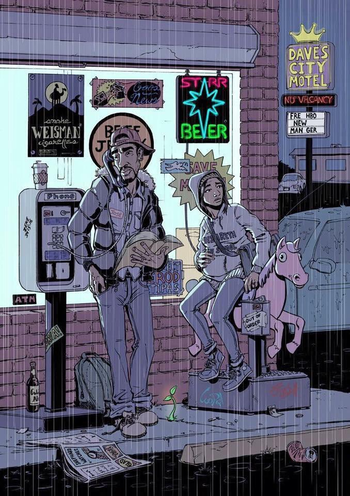 No Room.
Every Christmas Eve service we heard: because there was no room for them at the inn. Flashing hotel signs filled our minds as children. We might have imagined an overcrowded city or no place for Joseph and Mary because back then there were no call ahead reservations. For goodness sakes they rode to Bethlehem on a donkey; of course there were no phones. We were misled. The New Revised Standard Version has updated their translation; now Luke 2:7 reads: because there was no place in the guest room. Joseph’s extended family was from Bethlehemn. They could have slept in someone’s home. The truth is his family wouldn't make room for them. They were unwanted. They were unmarried and expecting a child. They were a nuisance. A burden. An embarrassment. No Room for family like that. No Room. 2,000 years later in cities and towns and villages across America there is still No Room. Let me be clear: There is physically PLENTY of room. The average size of a single family home in the U.S. is 2,273 square feet. There is more than enough physical room in America for everyone to have a place to call home. It’s not really about square footage, which we have. Instead we won’t make room. We won’t make room in our hearts, our calendars, our legislation, our lives, or so many other pockets of our communities for those who need room. I witnessed first hand this week that there is No Room for an abuse survivor trying their best to raise their family on an income less than their rent. Nothing in our city of Boston makes this possible. Instead it is a daily grind, a soul-depleting battle, an exhausting and unending trial. I discovered early as a teenager that there was No Room for an outspoken young woman who called out sexual violence. We might congratulate ourselves these days for making room since the hashtag #metoo spread across social media in a week, but do not be deceived. Sexual violence remains rampant. We do not make room for the endless stories of sexual violence from date rape to incest that leave women less than whole. In MOST churches across America No Room is made for LGBTQ+ people, women who desire ordination, teenagers transitioning, noisy children, doubters and questioners or God forbid someone who challenges authority. At the church I serve in West Roxbury we are reminded weekly that many are unwilling to make room for food insecure neighbors parking on the streets waiting for their trunks to be filled with healthy food. Neighbors call the police regularly on our food pantry. There just is No Room for the hungry. I learned first hand how our country makes No Room for undocumented immigrants. My dear friend killed himself after years and years of isolation and hiding, too afraid to drive a car, hoarding cash in his wallet for fear that at any moment ICE would rip him away from his family. Our country's Immigration and Naturalization Services had No Room for Carlos. The world lost a generous and truly kind man. Sadly the list continues. There is No Room for refugees. No Room for the supposedly unpatriotic. No Room for educationally expensive children. No Room for returning citizens who have served their time and are trying to put their best foot forward. No Room for those struggling with addiction. No Room for the visibly poor. The question we must ask ourselves this Christmas is a difficult one. Is there really No Room? Or are we unwilling to make room? Let us all resolve to make room for all of God’s beloved people, and to be surprised by the new life that appears in that very big room.  Tribe. That’s the word my husband has been using a lot lately as we discuss the world. We are all divided into our own ethnic, socio-economic, political, and religious tribes. Others use the word silo, but I think this refers more to the limited interaction individuals have with others outside of their social media “tribe.” Truth be told, in our global world, different tribes bump up against each other constantly in the marketplace, voting booth, school, and even home.
Tribes are, for a lack of a better word, “tribal.” Tribes tend to be fiercely protective of their identity, celebrating themselves as the best. If you aren’t following, think white parents shouting at black children during school integration in the 1960s. Think, junior high bullies in the lunchroom enforcing a code of cool and uncool. This is tribal behavior. Jesus was anti-tribal. He included everyone the cool kids make sure don’t sit at their lunch table: Samaritans, divorced women, tax collectors, lepers, migrants, the poor, and more. Jesus’ central message-- love your neighbor-- is a direct challenge to the tribalism of his particular time and place. American politics are incredibly tribal these days, leaving our country divided in ways that leave us afraid. But this isn’t particularly new. Our democracy is rooted in a two-party tribal system. Sadly, American Christianity is more tribal than American politics. Drive down the main street of any American town. There will be multiple churches, often of different ethnicities, that rarely interact with each other, even in small towns. They follow Jesus of Nazareth who commands us to love our neighbors, but when can we love our neighbors, if we never meet them? American Evangelicals and Fundamentalists believe their brand of Christianity is the only way. I have been accused of not being Christian (most often ironically by evangelical women), which is in itself a little funny, since I have spent my life serving the Gospel as an ordained Christian minister. What they are really trying to say is that I am not the right kind of Christian. Tribal. My favorite secret pastime is throwing stones. My internal dialogue goes something like this: Those folks are tribal, accusing me of not following Jesus just because I am an ordained woman. They clearly haven’t read the parts in the Bible where Jesus includes women in his ministry. Why do they think they are so Christian? Hmmm…. Sounds perhaps like I'm being just as tribal. Or…I proudly wear a t-shirt that reads, “God loves the people you hate.” Maybe I should remember that t-shirt is speaking directly to me since I have a long, secret list of people I hate. Again, tribal. This fall I have decided to resist this Christian tribalism in a concrete way. I am the pastor of two progressive Christian churches that work tirelessly to include everyone who walks through their doors. In one church an adult with developmental disabilities yells joyfully during service; her cries are met with smiles and later conversations during coffee hour. At another church, we are so concerned a member who uses a wheelchair feels included, nothing happens anywhere that is inaccessible. Both communities make a concerted effort to welcome LGBTQ+ folks and non-christians (yes, don’t tell anyone but both communities are filled with agnostics and people of other religious traditions and even married same gendered couples! Say it isn’t so! Once again, I’m being tribal.) Yet I wonder: would an evangelical, spouting born-again theology, walking into either church, be welcomed? I’m honestly not sure. In the progressive Christian church Evangelicals are akin to Samaritans in Jesus’ ancient Jewish tradition. There are lots of things that the Evangelical church has gotten wrong and many more things they have professed that have hurt others, such as the exclusion of LGBTQ+ persons and female pastors. I believe it is wrong that the Evangelical church weaponizes the Bible and does not recognize other religious traditions as being equally important paths to living meaningful lives connected to the divine. AND… There are things that the Evangelical church does really well! Have you ever been to an evangelical youth group or prayer gathering? There are lots of things we can learn from these fellow Christian’s without engaging in tribal culture wars. That is where I am. A pastor on the verge of preaching about what we can learn from the Evangelical Church. Currently my list includes church attendance, evangelism, giving, prayer, conviction, and assurance. I am sure more topics will emerge. I am also certain by the end of the fall I will be exhausted by my inter-religious foray and return to my tribal silo. But I also hope maybe, just maybe, more bridges will be built, some of us will be less afraid of the Evangelical Church, and we will learn a little more about what is at the very heart of Jesus’ gospel.  Yep, that’s right, PRIDE is a Christian Holiday!
What authority do I have to make that pronouncement? About the same authority the early Christian church did when they proclaimed Jesus was born on December 25th, which also happened to be the rival Sun-God’s birthday. I also claim the same authority the early Protestant church did when they regularly celebrated Reformation Sunday at the end of October. The question isn’t really if I can decide PRIDE is a Christian holiday. The question is: Why don’t all Christian churches celebrate people as their authentic selves? Why do some Christian churches still force some members, whom God knows and loves perfectly, to hide their authentic and beloved selves? In progressive churches, people can be their authentic selves. And at Grace Community Boston, PRIDE Sunday is a big celebration every year. This is why we celebrate PRIDE! #1 WELCOME! Jesus offered radical hospitality to everyone. For Jesus, there were no insiders and outsiders, included and excluded, pure and impure. There were only people, and he loved them all, including: tax collectors, lepers, sex workers, and samaritans. At Grace we want to extend a LOUD & CLEAR welcome to folks in the LGBTQ+ community as they are. Pride Sunday is one way of communicating Jesus’ radical hospitality to everyone, especially those who have often been excluded. #2 LGBTQ+ are God’s BELOVED! The vast majority of Christian churches in America condemn people in the LGBTQ+ community. @GCBoston we make a bold stand as progressive Christians on PRIDE Sunday that LGBTQ+ individuals are beautifully and wonderfully made. We are all God's beloved and we are each an integral part of God’s beloved community. Every year on PRIDE we serve rainbow communion (usually cookies decorated in all the colors) to express clearly that there is room for everyone at the table: gay and straight, non-binary and cis-genered, tall and short, rich and poor, documented and undocumented. This is the splendid, various, diverse body of Christ that Paul described in Romans 12 and Corinthians 12. #3 PRIDE is about MORE than LGBTQ+ issues. PRIDE is about extending God's radical love to all people. Just as the 1960s civil rights movement was about more than racial integration, PRIDE is about accepting everyone for who they are instead of placing everyone in the same narrow social box. You are who you are, and that is who God made you to be. PRIDE reminds us that God doesn’t want us to be anyone else, so we don’t have to fit into any preconceived identity. @GCBoston, PRIDE expands our hearts to celebrate all the variations of God’s creation in our community. And that is healing to all of us. #4 We are queer. Grace Community Boston isn’t a bunch of straights trying to be hospitable to a bunch of queers. We’re already diverse, a mixture of sexual orientations, gender identities, abilities and colors and complexions. We’re a diverse community that loves the diversity of God’s creation. At Grace, we follow Jesus and we are confident Jesus would be decked out in rainbow colors if he lived amongst us now, embracing all those who have been shunned simply for being who they are. God made us who we are. Jesus loves who we are. And Grace welcomes who you are. 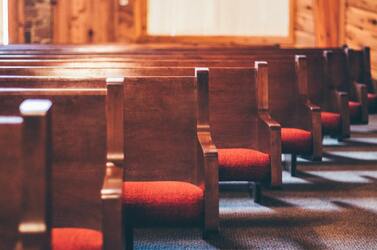 Two friends sat next to each other in church. They were both weepy, filled with all the complicated emotions that each were sorting through. One friend had just lost her father to insidious cancer that snatched him too early. The other friend is moving; it is a wonderful new beginning for her family, but also filled with the complications of saying goodbye to a community they have loved.
These two have become friends in church. At the beginning of service they were not sitting next to one another, but their children. Each announced in church their prayers: finding a new community, a mom who is alone after forty years and their joys: a new home with an incredible backyard, a month of dying that was a master-class in love. Each request was met with tears of acknowledgement and sighs. (I sometimes wonder if the very act of releasing breath for someone else is a direct prayer to God. We tend to sigh a great deal in church when we share our prayer requests.) By the end of service the two friends were sitting beside one another in the pew, as if huddled together to capture all the love that was present in the room to take home with them. They were not comparing their joy or their sorrow. The daughter who had just lost her beloved father was not telling her friend that her apprehension about leaving was minor in comparison to the grief she was processing. They were not comparing their joy or their sorrow. There was no meter to measure what emotions mattered more. I am positive God does not measure our hurt nor our joy. We don’t have to hurt a certain amount for God to pay attention. And our joy doesn’t have to be so loud, so exuberant, for God to notice. These two friends, tucked together in a solitary pew, knew that. Both were receiving what they came for: reminders that this beautiful and scary world is infused with God’s loving presence. They reminded each other of that love, they reminded the community gathered around them of that love, and we, as the church, reminded them of that love. It is an ever continuing circle that I enter every week as I step into the holy space of God’s gathered people.  The Reasons I do not want to remain a Christian
AND The Reasons I remain a Christian
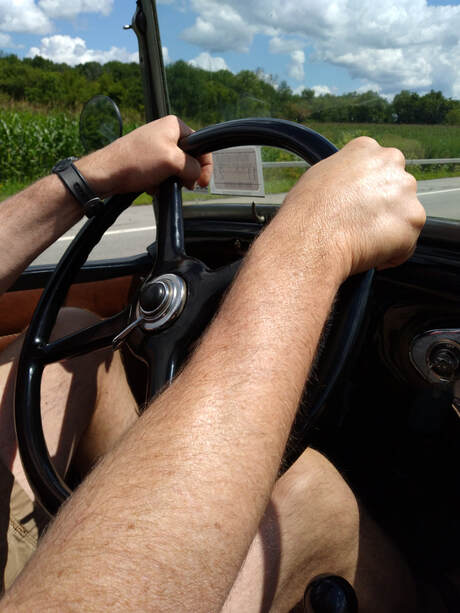 Rebellion Against Efficiency in a 1931 Model A Ford. Last week, my husband and I drove from my hometown, Eden, NY (an hour west of Buffalo) to Boston, MA in a 1931 Model A Ford Roadster. We celebrated this trip as a joyful rebellion against efficiency. But before I tell you about it, there are a few colliding stories and realities you must first understand. Story One: Ellie The Story of Ellie begins on a cold spring morning when my overly enthusiastic father told us he had just bought a new car-- a 1931 Model A Ford. It was going to be a “Driver” he repeated over and over again to anyone who would listen. I finally had the good sense to ask him just what he meant by driver. “This is not a fussy car,” he explained. “You can all drive her.” No one ever called Ellie “it,” and this was too long ago for her to be “they”. She was always a she.  My paternal grandfather loved old cars. He owned a fleet of them. And they were fussy. You would not dream of eating in them or going out for ice cream in them. They were not fun. They were museum pieces. In general, I thought my grandfather’s old cars were boring; I preferred my maternal grandmother’s new Buick. Like my grandfather, my father loves old cars. In fact he loves all moving vehicles, sentimentally attached to each one. Our barn sheltered more motorcycles and antique cars than farm equipment. When my grandfather died, my father kept his car collection, unable to part with it. Yet on that spring morning, when my father handed over a check to Bill Magavern for a Model A Ford, somehow things were different. She was a driver. And she had a horn that squawked, “A-woooo-gaah!” Not long after my father ordered vanity plates for Ellie that made clear her purpose: 31DRIVER. Soon Ellie became the car we packed into (three kids could easily fit in the rumble seat) for ice cream, the car we drove to the swimming hole, and the car that by the age of 13 I was driving on back roads. Ellie was the first car I drove. I even taught my cousin how to drive a stick on Ellie. We would cruise up our driveway, cut over to the barn, drive down the gas well road, go off-road over a small grassy field, ride along an old dirt road that led to a railroad bridge, then back again, repeat, and repeat, enamoured with our newfound freedom, oblivious to the fact that we were going nowhere. I even drove Ellie to a summer job when I was finally 16 and legal, let off the dirt road. But why the name Ellie? I couldn’t tell you. I vividly remember choosing her name and declaring it to my father so he would stop calling her DRIVER which seemed much too clunky for such a great girl. I knew immediately that she identified as a woman. She told me. Does this sound ridiculous? Perhaps. Yet I have always named my cars. They take on a personality of their own. And since I named her, she has never been referred to as the other cars in John Henrich’s fleet as “The 35 Cabriolet”, or “The Packard,” “The 6.9,” or “The Jeep.” Instead, Ellie has always been Ellie. She carries her name proudly.  Story Two: That Thing Called Covid and General Work-Life Exhaustion Not sure if you have heard, but we’ve been living through a pandemic for a long long long ass time. Remember when we thought it was only going to be a few weeks? I have been a pastor for 20 years, and with any career, 20 years is a long time. For some reason, the weight of the pastorate has settled unevenly on me this summer and I have been unable to find a balance. I have felt too tired, too overwhelmed. Maybe it is the combination of the pandemic and 20 years in ministry. Most folks I talk to are feeling the same. Jon Paul has been chair of the faculty senate at his college during the pandemic. During this time all classes moved online, professors were retrained, pay was cut, sabbaticals were cancelled, students became troubled, and professors moved close to the edge.Jon Paul loves his students. He loves teaching. He hates teaching online. Sounds about right, doesn’t it? Who loves sitting in front of a Zoom screen? To top it off, Jon Paul’s father died this year. You get the picture. Like most of the world, we have been feeling unbalanced in an unbalanced world. We were exhausted and burnt out, we craved a break, but how and where? Jon Paul hatched a plan: we would drive Ellie from my parents to our home outside of Boston. “A Date” he kept calling it with an enthusiasm reminiscent of my Dad’s mantra, “She’s a Driver!”  The Trip: A Rebellion Against Efficiency Besides a horse drawn carriage, traveling across New York State and Massachusetts in Ellie is about as slow as can be. We could not travel on the ever efficient New York State Thruway or Mass Pike; Ellie’s best cruising speed is 45mph. Both state highways are the result of the Interstate Highway System constructed under Dwight Eisenhower to increase the efficiency of travel and transportation. The Interstate Highway System also transformed the way we traveled. When my mother drove from Buffalo to NYC to visit her grandparents, her family (mom, her three siblings, dog, paternal grandmother, and of course her parents, all in one car) drove along Rt 20 from town to town to town. As a result of the Interstate Highway System, we now bypass all of these towns and the different scenery and cultures that accompany them. The highway system, although highly efficient, disconnects the traveler from the very communities that make up a state. On our Ellie trip, Jon Paul and I traveled mostly along Rt 20. , And since we moved from town to town, we discovered and observed things we would not have otherwise. For example, do you know what Riggie is? We had to look it up after we saw it advertised as Thursday’s special on a restaurant sign. Riggie is a “Utica Thing”-- a pasta dish consisting of a tomato-sherry sauce with chicken. We bought a jar of the sauce to try. And did you know that German Lutherans traveled up from the Hudson Valley into the Mohawk Valley long before the Revolutionary War? Neither did we, until we discovered a German Lutheran Church built in the 1700s. We also discovered that the Mohawk Valley, once a thriving industrial center nicknamed the “gateway to the west”, has been gutted by economic collapse and ravaged by poverty. We discovered something else we did not expect: people of color love old cars! Without question, more people of color waved, honked, shouted, and even stopped beside us in their cars to tell us how much they loved Ellie, to ask us to honk her horn, to inquire about her specifics. Is white culture more reserved? When you are bumping along in Ellie, the wind rushing around you, the engine rattling, the gears occasionally grinding, you can’t do much else but be present. Yes, I was knitting the entire time, but mostly I was just watching the road and the scenery pass by. My mind wandered. My thoughts slowed down. The knots radiating from my neck into my shoulders untangled. Jon Paul and I didn’t necessarily have endlessly deep conversation, but we were present to one another, not trying to tackle the latest task or make the most pressing decision. Our biggest decisions consisted of where next to purchase coffee, ice cream, or gas. I didn’t figure out how to create more balance in my life as a pastor of two churches and a mom of three. I didn’t solve the social inequity that I encounter weekly as a pastor who volunteers at a food pantry. I didn’t even finish my knitting project! Yet for three days I was utterly present to the world around me and the man beside me. There was no clear purpose to our trip. We didn’t accomplish anything. We drove super slow. We ate too much ice cream and enjoyed other delights like the best pear tart I’ve ever had. In a world that is ever pressing, suggesting we do just one more thing to our squeezed life, we rebelled, driving slowly, presently, inefficiently, in Ellie. And this was the best antidote I can imagine.  Jesus didn’t have Balance or Boundaries, yet he Embraced Inefficiency I can’t help but tell you a little bit about Jesus. I am certain he didn’t drive a 1931 Ford. Yet the one mode of transportation besides his feet he did take-- a colt or donkey depending on which Gospel you read--was pretty inefficient. It might have been faster to walk into Jerusalem on Palm Sunday instead of ride. Just like today, Jesus lived in an utterly out of balance, topsy-turvy world. There wasn’t a worldwide pandemic, but there was massive social unrest and upheaval. Jesus’ community was living under Roman occupation and the Jewish social order was thrown into chaos. Prophets, like Jesus, were to be found everywhere in ancient Palestine, calling for reform. To complicate matters, Jesus not only was calling for reform and a new social order, like many of the prophets of his day, he was also ministering individually to people. He walked the countryside, stopping in small villages to care for the many who sought his healing. Slow. Inefficient. Healing. He could barely move from one place to the next without crowds surrounding him. In one village a paraplegic was lowered through the roof since there was no other way to reach Jesus (Mark 2). In another town, a hemorrhaging woman had to reach through the crowd pressed in around her just to touch Jesus’ cloak in hopes of being healed (Luke 8). Jesus was utterly present to those around him. He encountered them as they were, in their communities, in the very space of their suffering and beauty, and he spoke hope and offered healing. He delivered his message on the slow and inefficient road to Jerusalem where his message must be spoken if he hoped to change any larger social order. This fully present meandering left Jesus exhausted. He hadn’t heard yet of our 21st century therapeutic buzz word: boundaries. He only knew that in each moment he was to care for those he met. And he didn’t have a 1931 Ford in which to flee, so he often found a boat and sailed out to the middle of the Galilee to escape the crowds (Matthew 8, 14,15). Jesus could not transcend the pressing needs of the time in which he lived nor the real demands of the people he met. If he had been efficient and boundaried, his ministry would have never changed the lives of so many. But due to his reckless, inefficient love, his stories were told long after his death, passed from generation to generation, until they transformed our world. And just like us, he could grow tired. He escaped, if only for a few hours, in a boat. Somehow, we must rebel against efficiency and carve out time for ourselves. On most days, I have no idea how to do this. Nor do I know how to sustain this effort. But I know, even if for moments, we must. Perhaps instead of emptying the dishwasher in the last few minutes before I leave for work, I can sit down and drink coffee and breathe. Perhaps we can escape, even if only for an hour, in our own equivalent of a boat. God designed the universe for a sabbath, and took one herself. We should too. For now, Jon Paul and I plan on taking another trip in Ellie. Our current plan: the Hudson River Valley. Stay tuned. 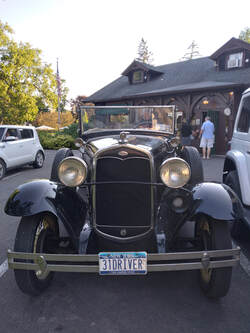
|
Categories |
 RSS Feed